

Emotional safety in relationships means feeling secure to be yourself with your partner.
It is the trust and understanding that lets you share feelings, fears, and dreams without fear of judgment.
When you have emotional safety, you feel accepted, cared for, and free to communicate openly.
A healthy relationship depends on emotional safety because it builds deeper connection and love.
Without emotional safety, partners may feel anxious, lonely, or misunderstood.
For example, if you come home upset, a safe partner will comfort you rather than scold you.
When each person can show emotions openly without fear, the relationship thrives.
Below we will explore what emotional safety really is, why it is important, and how to create it.
If you’re looking for practical ways to strengthen your bond, our guide on healthy relationship habits explains the daily actions that help couples build lasting connections.
What Is Emotional Safety in Relationships?
Emotional safety in relationships is the feeling of being accepted and protected while being yourself.
It means you can express your thoughts, feelings, vulnerabilities, and needs without fear of blame or ridicule.
Think of it like being able to cry, laugh, or show anger without your partner withdrawing or punishing you.
Being emotionally safe allows couples to share their true selves and grow together.
For example, if you feel worried about money, emotional safety lets you tell your partner honestly without fearing an angry response.
In contrast, emotional safety is different from physical safety; you can feel unsafe even when there is no physical danger.
Imagine walking on eggshells at home; that is the opposite of emotional safety.
This feeling erodes confidence and prevents real connection.
An emotionally safe relationship is sometimes called a secure relationship because both partners feel confident and stable together.
Psychological safety is a related concept meaning you feel free to speak your mind and make mistakes without fear.
Why Emotional Safety Is Important in Relationships
Emotional safety builds trust and reduces anxiety in relationships.
When partners feel safe, they tend to communicate better and solve conflicts more easily.
It encourages vulnerability, which leads to greater intimacy and closeness.
Feeling emotionally safe also improves emotional well-being and long-term relationship stability.
Without emotional safety, small issues can blow up into big fights or withdrawal.
Emotional safety fosters trust in relationships by letting each person know their feelings matter.
It can even lower stress hormones like cortisol, because neither partner is constantly on guard.
Here are some key reasons why it matters:
- It lets you trust each other more, because you know your feelings are respected.
- It reduces anxiety, since you are not afraid of harsh reactions.
- It invites vulnerability, so you can be open about your needs and desires.
- It strengthens intimacy, because you feel comfortable sharing your true self.
- It encourages honest communication instead of hiding feelings.
- It prevents long-term resentment by addressing issues calmly.
- It creates a stable environment where love and respect can grow.
For example, when couples feel safe together, even tough conversations often end in understanding instead of anger.
When emotional safety is high, couples often report better emotional well-being and satisfaction.
Signs of Emotional Safety

Knowing the signs of emotional safety can help you see how secure your relationship is.
In an emotionally safe relationship, partners feel comfortable sharing feelings daily.
Communication is open, honest, and respectful.
You can express anger or sadness without fear of harsh judgment.
Both partners actively listen and support each other.
Here are signs you are in an emotionally safe relationship:
- You can express your feelings freely without fear of being criticized or dismissed.
- Your partner listens actively, shows empathy, and takes you seriously.
- You feel accepted for who you are, even with flaws.
- Boundaries are respected; you don’t feel pressured to change who you are.
- Conflicts remain respectful: no name-calling or contempt.
- Both partners apologize and forgive, focusing on solutions rather than blame.
- You feel calm or comforted rather than anxious or defensive.
- You support each other’s goals and celebrate growth together.
You feel comfortable being vulnerable, sharing your deepest fears and hopes without feeling ashamed.
For example, you might eagerly share good news because you know your partner will genuinely celebrate with you.
These kinds of behaviors create a supportive space where both partners feel valued and understood.
Signs Emotional Safety Is Missing
If emotional safety is lacking, relationships often show warning signs.
You might feel like you have to hide your feelings or pretend to be fine.
Partners may react harshly or become defensive during conversations.
You may notice less affection or an increase in anxiety because emotional walls are up.
Here are some common signs of missing emotional safety:
- Constant criticism or blaming undermines your confidence.
- You feel like you are walking on eggshells around your partner.
- You avoid sharing worries or unpopular feelings to prevent fights.
- The silent treatment or withdrawal is used as punishment.
- Emotional manipulation like guilt-tripping or gaslighting happens.
- Trust is low, and you question your partner’s intentions often.
- Frequent defensiveness arises even in small disagreements.
- You often feel emotionally drained or alone in the relationship.
- Difficult conversations are avoided altogether.
For instance, you may hesitate to share good news if you fear it will upset your partner.
You might find yourself tensing up before bringing up a difficult topic.
You feel anxious or drained after interacting, even when nothing major happened.
What Causes Emotional Safety to Break Down?
Emotional safety can break down for many reasons, often related to past experiences or current behaviors.
For example, if one partner grew up feeling judged, they may test whether they will be accepted before sharing their feelings.
Not respecting each other’s differences or boundaries can slowly break down safety.
Sometimes outside stress (like at work) spills into the relationship, making partners take out frustrations on each other.
Someone who suffers from relationship anxiety may struggle to feel secure and may inadvertently make their partner anxious too.
Here are some common causes:
- Poor communication habits, such as frequent yelling or interrupting.
- Past trauma or childhood issues that make one partner overly guarded.
- Lack of empathy or refusal to listen to each other’s feelings.
- Betrayal of trust, such as infidelity or broken promises.
- Consistent criticism or contempt over small issues.
- Emotional neglect, where one partner dismisses or ignores feelings.
- Controlling or jealous behavior that creates fear of expression.
- Unresolved conflicts that build resentment over time.
- Stress (money, health, work) making partners short-tempered.
- Taking each other for granted and not showing appreciation.
How to Build Emotional Safety in Relationships

The good news is you can create emotional safety with intention and care.
It takes practice and consistent effort from both partners.
Start with small daily actions and build from there.
For example, set aside time each week to discuss anything on your mind, so both of you feel heard.
Consider seeking couples counseling or relationship advice if you both struggle to feel safe.
Here are ways to develop emotional safety:
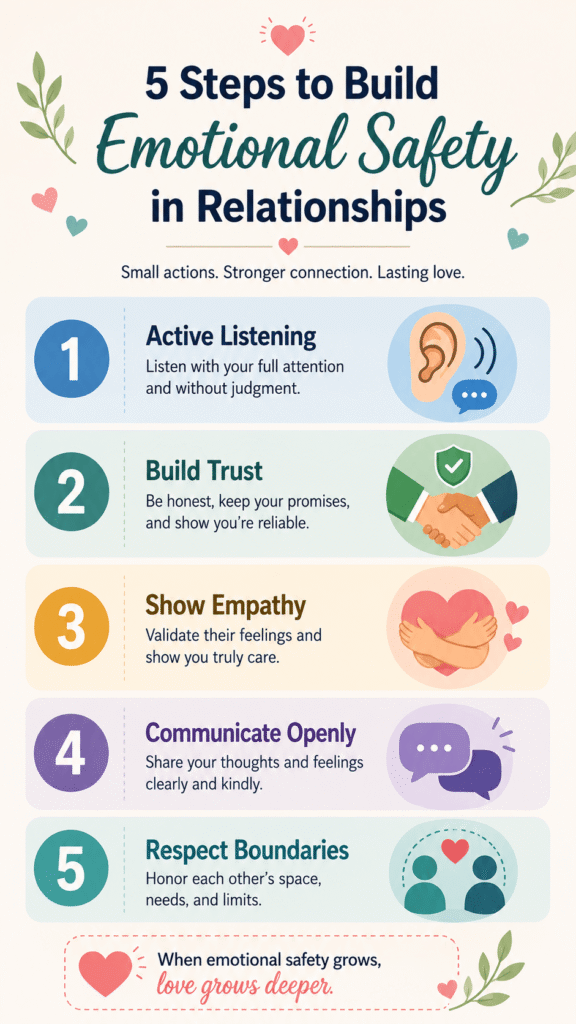
- Listen without interrupting. Give your partner your full attention by putting away phones and maintaining eye contact.
- Validate feelings. Show that you understand by saying things like “I see why you feel that way.”
- Keep promises and be reliable. Doing what you say builds trust and shows your partner they can count on you.
- Be honest and gentle. Speak truthfully with kindness and avoid lying or hiding information.
- Respect boundaries. Honor each other’s personal space and time, recognizing that everyone needs limits.
- Show empathy. Try to feel what your partner feels, even if you don’t fully agree with them.
- Avoid blame. Use “I” statements (for example, “I feel…” instead of “You always…”) when discussing issues.
- Communicate calmly. Stay composed and use a gentle tone when discussing problems.
- Apologize sincerely. Admit when you’re wrong without making excuses or justifying your actions.
- Take a break when needed. If emotions run high, step away for a few minutes and then continue calmly.
- Express appreciation. Notice and thank your partner for the little things they do to reinforce positive feelings.
- Be patient. Understand that building emotional safety takes time and grace, so give each other room to grow.
- Learn each other’s love language. Understanding how each of you prefers to receive love (words, actions, etc.) helps meet emotional needs.
- Revisit boundaries. Regularly check in on each other’s boundaries to ensure you both feel respected and comfortable.
- Spend quality time together. Engage in activities like walks or shared hobbies to strengthen your bond.
- Check in daily. Ask about each other’s day and feelings to maintain your emotional connection.
Every relationship is unique, so find what makes you both feel safe.
For example, some couples find it helpful to check in with each other with a question like, “What do you need from me right now?”
Consider sharing your feelings about emotional safety and practicing a small positive habit together.
Communication Habits That Create Emotional Safety
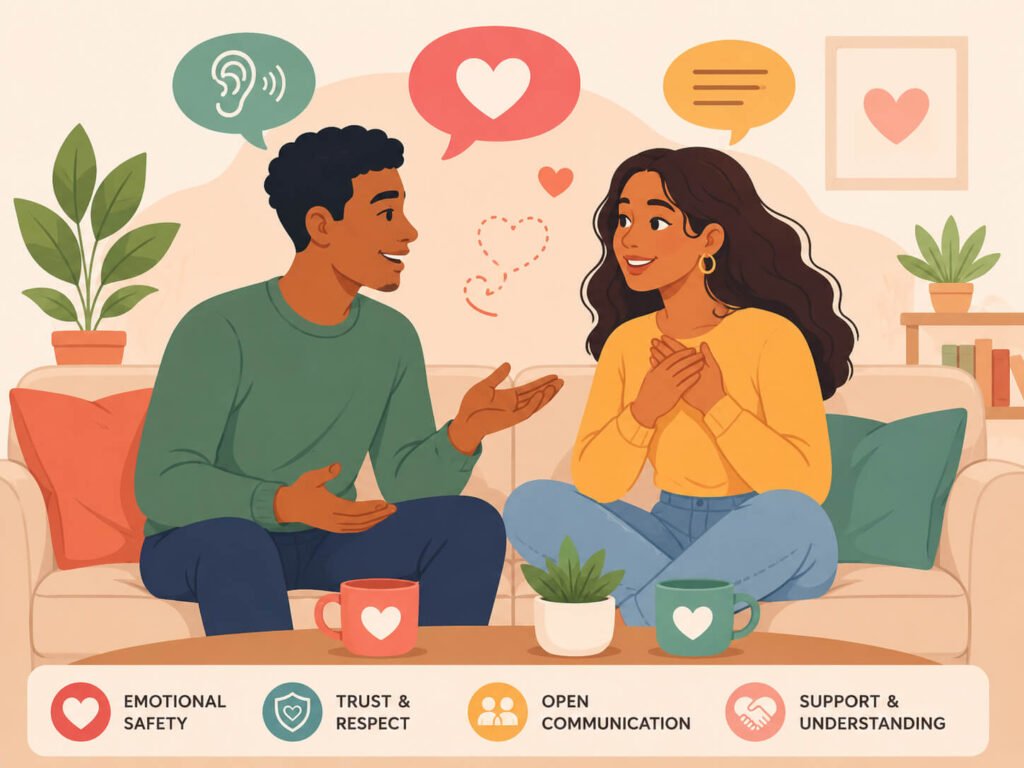
How you communicate can strengthen emotional safety daily.
Good communication habits include:
- Active listening. Focus on your partner’s words and feelings, rather than planning your reply.
- Non-defensive responses. Try to hear criticism without immediately defending yourself.
- Open-ended questions. Ask questions that invite sharing, like “How did that make you feel?”
- Gentle honesty. Share your thoughts kindly, even when it’s hard.
- Emotional validation. Let your partner know you accept their feelings, even if you feel differently.
- Regular check-ins. Make it a habit to talk about emotions, not just logistics.
- Gratitude. Express appreciation often, so both partners feel valued.
- Team mindset. Approach conflicts as problems to solve together, not battles to win.
- Curiosity. Approach conversations with genuine interest in understanding, not to judge.
- Non-verbal cues. Pay attention to your partner’s body language and expressions to sense how they feel.
- Patience. Give your partner time to think before responding and allow silence to speak.
- Use “we” and “us” language. This shows unity and that you’re on the same side.
In moments of conflict, taking even one deep breath together can diffuse tension.
For example, you could pause and count to 10 before speaking to avoid reactive words.
Habits That Destroy Emotional Safety
Certain behaviors erode trust and safety in a relationship.
Avoid these habits to keep your relationship healthy:
- Yelling or shouting. Raises fear and shuts down communication.
- Sarcasm or mockery. Even jokingly belittling your partner damages respect.
- Name-calling or insults. These create deep hurt and anxiety.
- Stonewalling (silent treatment). Ignoring your partner leaves them feeling isolated.
- Invalidating feelings. Telling them they’re “too sensitive” makes them hide emotions.
- Keeping score. Bringing up past mistakes during an argument breeds resentment.
- Broken promises. Each broken promise chips away at trust.
- Public embarrassment. Criticizing or shaming in front of others hurts deeply.
- Constant criticism. Pointing out flaws nonstop makes one withdraw emotionally.
- Refusing to apologize. Not admitting mistakes shows you don’t value the relationship.
Replacing negative habits with supportive communication techniques can help restore feelings of safety and respect.
For example, instead of blaming, try using teamwork language like “Let’s solve this together” to make problems seem shared.
Can Emotional Safety Be Rebuilt?
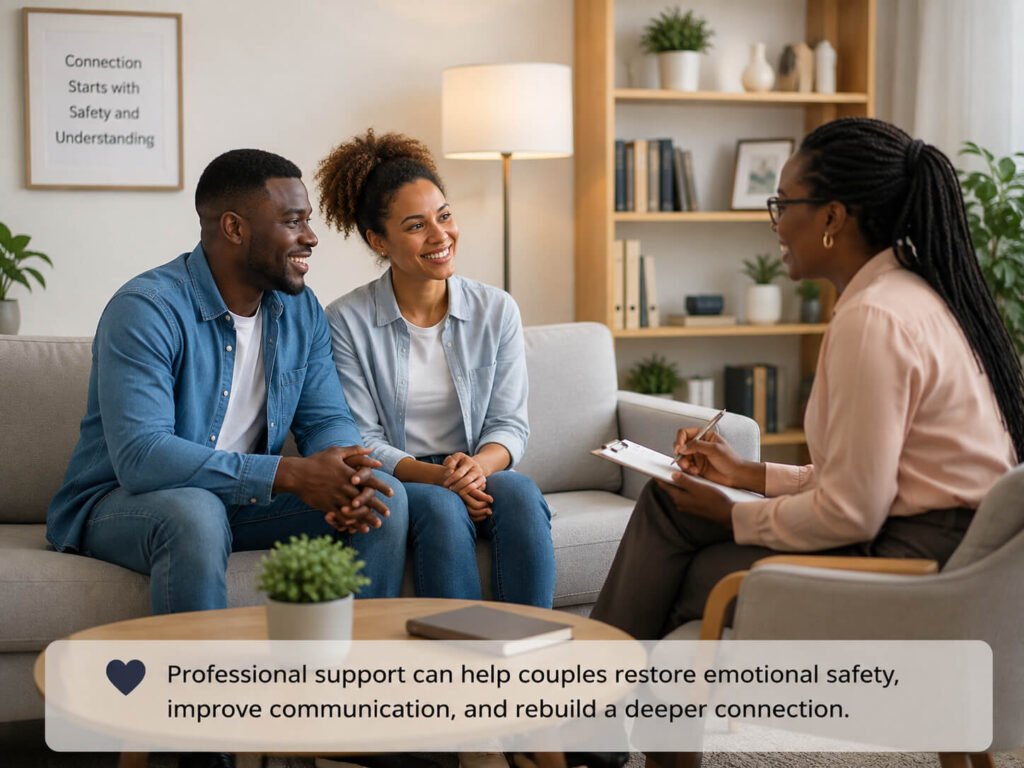
Yes, emotional safety can often be rebuilt if both partners commit to change.
Rebuilding trust takes time, consistency, and patience.
For example, if trust was broken, you might start by openly discussing hurt feelings and setting clear expectations.
It often begins with small acts of trust over and over again.
Here are steps to restore emotional safety:
- Acknowledge what happened. Admit the issue or hurt that broke trust.
- Apologize and forgive. Offer a sincere apology and work toward genuine forgiveness.
- Communicate needs. Tell each other what you need to feel secure again.
- Be consistent. Follow through on your words every day to rebuild confidence.
- Seek counseling if needed. A therapist can help guide you through healing.
- Re-establish routines. Small rituals (like a weekly date night) can rebuild connection.
It’s important to be patient with each other and celebrate small steps forward.
With time and effort, many couples find that a relationship becomes even stronger after overcoming challenges.
For example, some couples write letters or share playlists to gently express apologies and reconnect.
Emotional Safety vs Emotional Intimacy
Emotional safety and emotional intimacy in relationships are related but distinct:
- Emotional Safety: Feeling secure and free to be yourself without fear; it is the foundation that allows trust to develop.
- Emotional Intimacy: Feeling deeply connected and understood by your partner; it grows out of safety when both people share vulnerability.
In other words, emotional safety is like the strong foundation of a house, while emotional intimacy is the warmth and closeness you feel inside it.
One cannot truly experience deep intimacy without first feeling emotionally safe.
This foundation of trust ultimately helps you feel more comfortable showing love and vulnerability.
Frequently Asked Questions
What is emotional safety in relationships?
It means feeling safe to express your true feelings and needs with your partner without fear of being judged or punished.
You feel accepted, respected, and secure when you share your thoughts or vulnerabilities.
This creates trust and openness between partners.
How do you build emotional safety in relationships?
Building emotional safety involves open communication, empathy, and trust-building actions.
For example, listen without interrupting, validate your partner’s feelings, and keep your promises.
Also, apologize when you are wrong and avoid blaming language.
Consistently acting with kindness and honesty helps create a safe emotional space.
What are signs of emotional safety in relationships?
Signs include being able to talk honestly, feeling accepted, and staying calm during conflicts.
You may notice you and your partner handle disagreements respectfully and support each other’s goals.
When both people feel emotionally secure, there is usually more laughter, teamwork, and closeness.
What destroys emotional safety in relationships?
Emotional safety can be damaged by criticism, contempt, or betrayal.
Bad habits like shouting, sarcasm, or stonewalling can make one feel unsafe.
Broken promises and lack of empathy also erode trust.
These behaviors create fear and distance instead of comfort and trust.
Can emotional safety return after betrayal or hurt?
Yes, emotional safety in relationships can often return if both partners work on rebuilding trust.
This means open communication about what happened, sincere apologies, and consistent trustworthy actions over time.
It requires patience and effort from both people to heal and feel safe again.
How long does it take to rebuild emotional safety?
Rebuilding emotional safety varies by couple and situation.
Sometimes it can take weeks or months of steady effort to see real changes.
The key is consistency: small steps each day add up.
Trust is rebuilt gradually, so be patient and supportive of each other.
What makes someone feel emotionally safe?
They feel emotionally safe when their partner consistently listens, respects their boundaries, and shows empathy.
Actions like comforting each other, expressing appreciation, and building trust over time all contribute.
Emotional safety grows when both people treat each other with kindness and understanding.
Is emotional safety more important than love?
Emotional safety and love go hand in hand in relationships; one is not truly greater than the other.
You might say that emotional safety creates the space where love can grow and thrive.
Without emotional safety, even deep love can feel unstable because fear and mistrust get in the way.
Building emotional safety supports your love by ensuring you both feel secure and cared for.
Conclusion
Emotional safety is the foundation of lasting, loving relationships.
When partners trust each other and communicate with kindness, their bond grows stronger.
Even if it is missing now, take small steps every day to create a more secure connection.
Remember, both people have a role: be honest, listen well, and treat each other with respect.
Consider sharing these ideas with your partner or a friend, or discussing one small step you can take together today.
By prioritizing emotional safety, you can enjoy a happier, healthier relationship built on love and trust.
Emotional safety is one of the key ingredients of a lasting relationship. If you’d like to learn about the other qualities that help couples stay together, read our guide on what makes a relationship last.